
Sustainable Medical Device Packaging
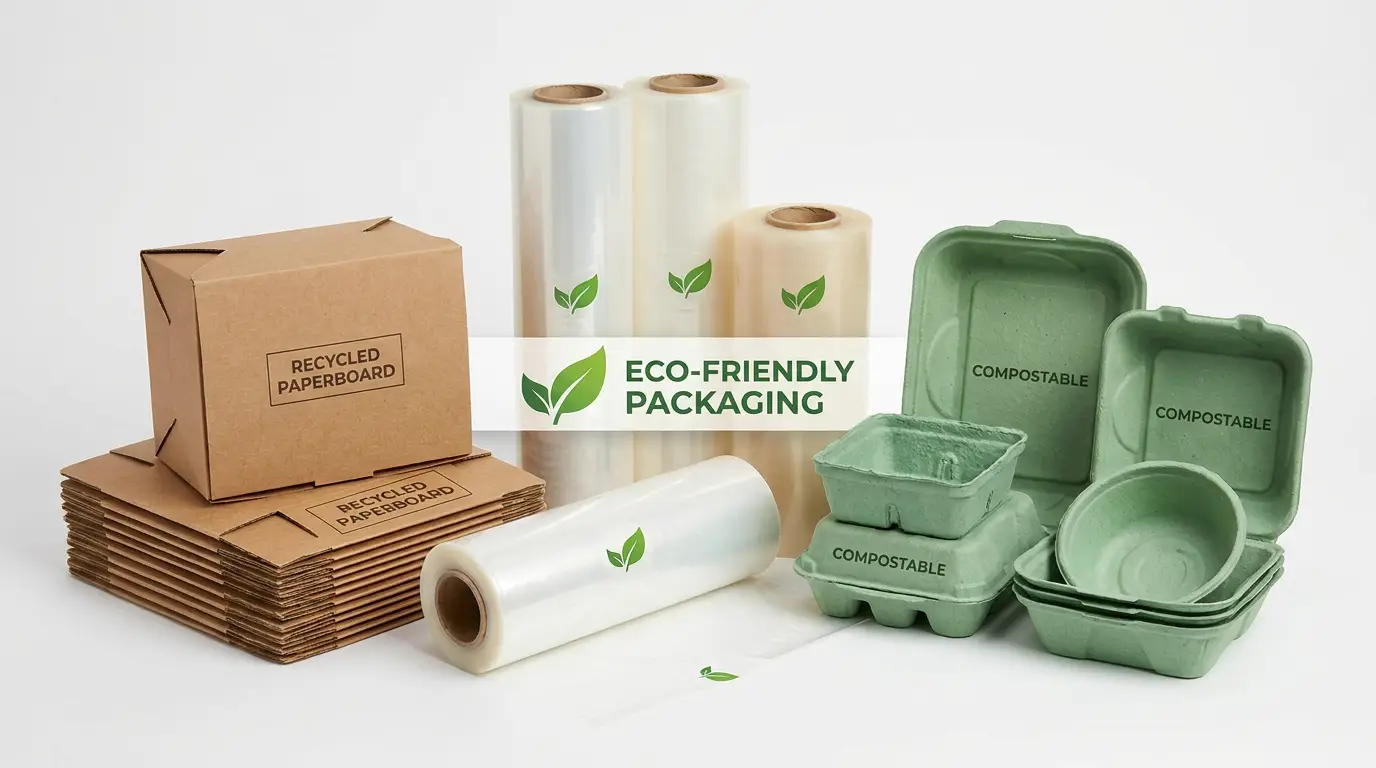
Sustainable Medical Packaging Solutions
Environmentally responsible sterile packaging that meets ISO 11607, EU MDR, and PPWR requirements without compromising patient safety
Sustainability in Medical Packaging: Challenges and Opportunities
Sustainable packaging in the medical device and pharmaceutical sectors faces a fundamental tension: environmental imperatives push toward reduced plastic use, recyclability, and bio-based materials, while patient safety requirements demand absolute sterility maintenance, validated shelf life, and consistent barrier performance. Navigating this tension requires a structured, evidence-based approach.
The EU Packaging and Packaging Waste Regulation (PPWR), effective from 2025 onwards, introduces mandatory recyclability requirements and targets for recycled content in packaging. Medical device manufacturers must assess how these requirements interact with their existing validated packaging systems and plan a transition pathway that maintains ISO 11607 compliance throughout.
MedicoPax works with manufacturers to assess sustainability opportunities across the packaging system — material reduction, mono-material structures, renewable content, and end-of-life pathways — while ensuring that every change is risk-assessed and revalidated before market introduction.
Sustainable Material Strategies for Medical Packaging
Material Reduction (Lightweighting)
Reducing film gauge and tray wall thickness directly reduces material consumption and packaging weight. Lightweighting requires tensile and barrier performance validation to confirm that reduced-gauge materials still meet the sterile barrier specification. This is often the most immediately achievable sustainability improvement with the lowest revalidation risk.
Mono-Material Structures
Traditional medical packaging laminates (e.g., PET/PE, PA/PE, PET/foil) are difficult to recycle due to mixed material composition. Mono-material structures — all-PP or all-PE pouches and trays — are technically recyclable but require validation to confirm barrier performance and seal compatibility. Several suppliers now offer mono-material structures that have been pre-validated against ISO 11607 requirements.
Recycled Content (PCR/PIR)
Post-consumer recycled (PCR) and post-industrial recycled (PIR) content films are being introduced into non-sterile medical packaging. For sterile barrier applications, traceability and consistency of recycled content must be demonstrated, as batch-to-batch variability in recycled feedstocks can affect sealing performance. Full revalidation is required for any material change.
Bio-Based and Compostable Materials
Bio-based PLA, cellulose films, and other renewable-resource materials are being evaluated for pharmaceutical and lower-risk medical device packaging. Their use in sterile barrier systems is currently limited by moisture sensitivity, barrier performance, and sterilisation compatibility constraints. Market-ready solutions are expected to expand significantly over 2025–2030 as material innovation continues.
Regulatory Framework for Sustainable Medical Packaging
Any material or structural change to validated medical packaging must be managed through a documented change control process that includes a risk assessment and revalidation programme. The following regulatory and standards framework applies:
- ISO 11607-1 & -2: All material changes require re-assessment of sterile barrier performance and process revalidation
- ISO 13485 Change Control: Requires documented justification, risk assessment, and verification/validation for packaging changes
- EU MDR Article 10(9): Significant changes to packaging affecting device safety require notified body involvement
- EU PPWR: Introduces mandatory recyclability design requirements and recycled content targets; medical exemptions apply in limited cases — confirm applicability with your regulatory affairs team
- ISO 18601–18606: Packaging and environment standards covering optimisation, reuse, recovery, and recycling
Sustainable Packaging Roadmap for Medical Device Manufacturers
MedicoPax recommends a structured three-phase approach to sustainable packaging transition:
- Assess: Map current packaging portfolio against PPWR recyclability requirements; identify high-impact items; benchmark material weights against best-in-class
- Prioritise: Rank opportunities by environmental impact, revalidation complexity, and supply chain feasibility; identify quick wins (gauge reduction, paperboard replacement in secondary packaging) vs. strategic projects (mono-material primary structures)
- Validate and Transition: Execute change control for each initiative; run parallel production with validated legacy packaging until new packaging qualification is complete; document and communicate sustainability improvements in technical file and ESG reporting
Frequently Asked Questions
Compliance is not inherent to the material — it must be validated for the specific application. Many sustainable material options (lighter gauges, mono-material structures, PCR-content films) can be validated to ISO 11607 when tested appropriately. The validation programme for a new material must include the same integrity, strength, ageing, and sterilisation compatibility testing as any other packaging validation.
PPWR applies broadly to packaging placed on the EU market, but contains provisions for functional recycling exemptions where recycling would compromise product safety, hygiene, or regulatory compliance. Medical device manufacturers should conduct a detailed assessment of PPWR applicability to their specific packaging portfolio — the outcome depends on device class, packaging function, and recyclability infrastructure availability. Regulatory affairs and legal counsel input is essential.
Currently, use of PCR/PIR content in primary sterile barrier films is very limited due to traceability, consistency, and safety concerns (risk of chemical contaminants in recycled polymers). Some non-critical components of the packaging system — outer cartons, protective trays, secondary packaging — are more amenable to recycled content. For sterile barrier films, bio-based virgin polymers are a more immediately viable sustainability option.
Lightweighting (reducing film gauge or tray wall thickness) requires revalidation of any performance characteristic that could be affected — particularly seal strength, puncture and burst resistance, and package integrity post-distribution. If gauge reduction is within a validated material equivalency window, a reduced revalidation scope may be acceptable. Any change outside the validated window requires full requalification.
Recyclable packaging can be sorted and processed back into raw material at the end of its life — but this requires available collection and recycling infrastructure and actual consumer/user behaviour. Sustainable packaging is a broader concept encompassing the full lifecycle: material sourcing (renewable vs. fossil), manufacturing energy use, product protection (preventing waste), shelf life (avoiding spoilage), and end-of-life. In medical packaging, the primary sustainability priority is typically material reduction (lightweighting and design efficiency) as recyclability in clinical waste streams is severely limited.
Sustainable Medical Packaging ConsultationWork with our team to identify and validate sustainable packaging alternatives for your device portfolio.
Start the Conversation →