
Thermoforming for Medical Device Packaging
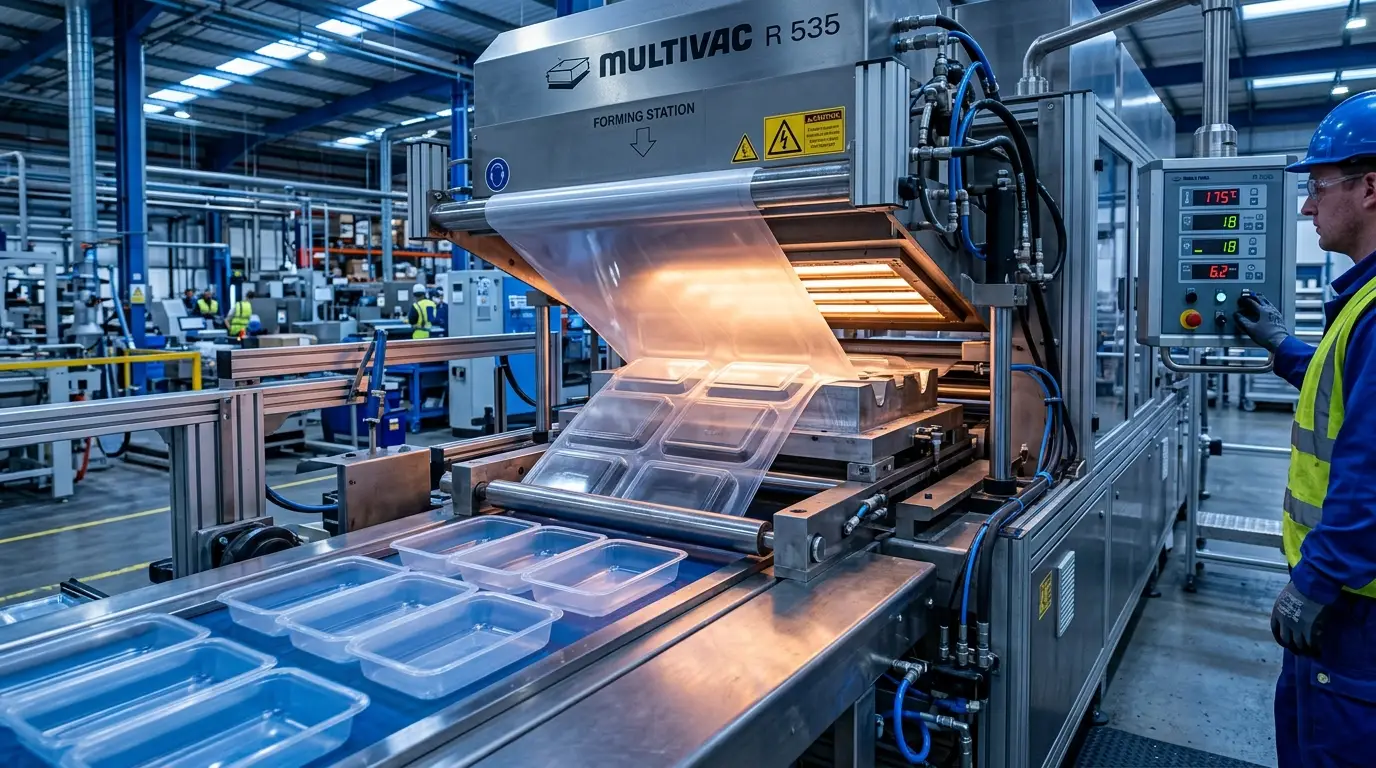
Thermoforming Packaging for Medical Devices
Precision-formed sterile barriers that meet ISO 11607 requirements for medical device packaging
What Is Medical Thermoforming Packaging?
Medical thermoforming packaging is a critical manufacturing process used to produce sterile barrier systems that protect implants, surgical instruments, and diagnostic devices. The process heats medical-grade polymer films or sheets until pliable, then forms them into custom cavity shapes under vacuum or pressure against precision tooling.
The resulting formed tray is sealed with a lid material — typically a porous medical-grade Tyvek or a transparent film — to create a complete sterile barrier system (SBS) as defined by ISO 11607-1. For medical device manufacturers, thermoforming offers the most versatile path to achieving validated, compliant packaging at scale.
Unlike industrial packaging, medical thermoforming must maintain sterility throughout the product's stated shelf life and withstand sterilisation methods including ETO, gamma irradiation, and steam autoclave processes.
Regulatory Context: ISO 11607-1:2019 defines requirements for materials, sterile barrier systems, and packaging systems for terminally sterilised medical devices. Thermoforming must be validated per ISO 11607-2 to confirm design and process specifications.
Materials Used in Medical Thermoforming
Material selection is governed by the sterilisation method, device classification, and required barrier properties. Common materials include:
- PETG (Polyethylene Terephthalate Glycol) — Preferred for ETO and gamma-compatible trays; excellent clarity for device inspection
- HIPS (High Impact Polystyrene) — Cost-effective for non-sterile protective packaging and dry devices
- HDPE (High-Density Polyethylene) — Used for autoclave-sterilised device packaging due to heat resistance
- PVC/PVDC — Provides excellent moisture and oxygen barrier; common for pharmaceutical and implant applications
- PP (Polypropylene) — Steam sterilisation compatibility; widely used for surgical tray systems
Lid materials include medical-grade Tyvek (DuPont), coated polyester films, and foil laminates — all selected based on peel strength validation, microbial barrier performance, and sterilisation compatibility.
Thermoforming Process Steps
- Film Loading: Roll-fed or sheet-fed medical-grade polymer is loaded into the machine and clamped
- Heating Zone: Infrared or contact heaters bring the film to forming temperature (typically 120–180°C depending on material)
- Forming: Vacuum, pressure, or mechanical plug assist draws the heated film over or into precision aluminium tooling
- Cooling: Formed cavities cool rapidly to retain geometry before cutting
- Sealing: Lid material is heat-sealed to the formed tray flange using validated seal parameters (temperature, pressure, dwell time)
- Inspection: Dye penetration testing, visual inspection, and peel testing verify seal integrity per ASTM F88
- Sterilisation: Complete sealed units are sterilised by ETO, gamma, or steam as required
Advantages for Medical Device Manufacturers
- Custom cavity dimensions tailored to exact device geometry — eliminates movement and reduces risk of damage in transit
- High-volume production capability with consistent, validated output
- Transparent films allow device inspection without opening the package
- Compatible with all major sterilisation methods (ETO, gamma, e-beam, steam)
- Supports complete technical file and DHF documentation for EU MDR and FDA 510(k) submissions
- Wide material choice enables optimisation for cost, barrier performance, and sustainability targets
Regulatory Compliance and Validation
Medical thermoforming packaging must be fully validated as part of the device's Design History File (DHF). This includes:
- IQ/OQ/PQ — Installation, Operational, and Performance Qualification of the forming and sealing process
- Seal strength testing per ASTM F88 at minimum and maximum seal parameters
- Bubble leak testing per ASTM F2096 to confirm package integrity
- Accelerated ageing per ASTM F1980 to validate shelf life claims
- Distribution simulation per ASTM D4169 to demonstrate transit performance
For EU MDR compliance under Regulation (EU) 2017/745, packaging is classified as a component of the sterile barrier system and must be documented within the technical file. ISO 11607-1:2019 and ISO 11607-2:2019 are the harmonised standards referenced by both EU MDR and FDA 21 CFR Part 820.
Frequently Asked Questions
ISO 11607-1 does not mandate specific materials but requires that all materials used in sterile barrier systems are validated for their intended use. Commonly used materials include PETG, HDPE, PP, and PVC/PVDC films, combined with Tyvek or coated polyester lid materials. Material selection must consider the sterilisation method, shelf life, and barrier requirements.
Validation follows ISO 11607-2 and includes process validation (IQ/OQ/PQ), seal strength testing per ASTM F88, integrity testing per ASTM F2096 or ASTM F1929, and ageing studies per ASTM F1980. All validation data must be documented and retained as part of the device's Design History File.
Yes, most medical-grade PETG and HDPE films are gamma-stable. However, PVC-based films may yellow or become brittle under irradiation. Material compatibility must be validated for the specific sterilisation dose (typically 25–45 kGy) as part of the package validation programme.
ISO 11607 is the technical standard defining requirements for sterile barrier systems. EU MDR (Regulation 2017/745) is the regulatory framework that references ISO 11607 as a harmonised standard. Compliance with ISO 11607 provides a presumption of conformity with EU MDR packaging requirements, but manufacturers must also document packaging within the device technical file.
Shelf life is determined by validation — typically 2 to 5 years depending on material, closure type, and storage conditions. Accelerated ageing studies per ASTM F1980 are used to predict shelf life within a compressed timeframe, with real-time ageing studies running in parallel for confirmation.
Need Medical Thermoforming Packaging?Request specifications, validation support, and custom tray design for your medical device.
Request Information →