
Blister Packaging for Medical Devices
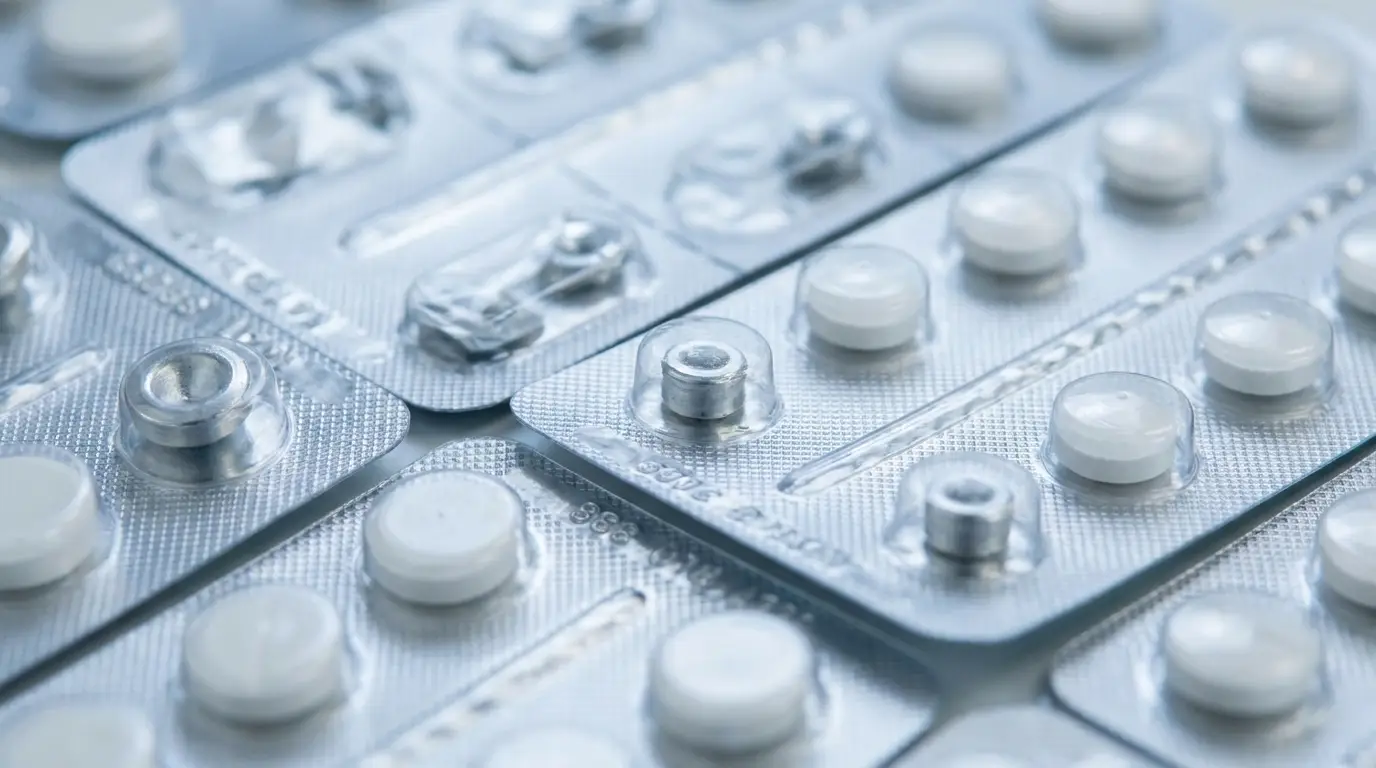
Blister Packaging for Medical Devices and Pharmaceuticals
Tamper-evident, sterile-compatible blister packaging validated to ISO 11607 and EU MDR requirements
Medical Blister Packaging: Definition and Applications
Medical blister packaging consists of a pre-formed cavity — the blister — sealed with a flat lidding material. The blister body is typically a thermoformed or cold-formed polymer or aluminium foil, while the lid is a coated aluminium foil, Tyvek, or paper/polymer laminate that can be peeled open at point of use.
In medical device and pharmaceutical packaging, blister packs serve as both the primary sterile barrier and the product presentation format. Each unit is individually packaged, enabling controlled single-dose dispensing, precise inventory management, and robust tamper evidence — essential for hospital, pharmacy, and home-care environments.
Applications span single-use surgical instruments, wound care dressings, IVDs (in vitro diagnostics), drug-device combination products, and oral solid dosage forms. The format's flexibility and regulatory track record make it the preferred choice for thousands of Class I–III medical devices.
Types of Medical Blister Packaging
Thermoformed Blister (Rigid)
Rigid blisters are formed from PETG, PVC/PVDC, or PP films using thermoforming. The transparent cavity allows device inspection before use and is compatible with ETO, gamma, and e-beam sterilisation. Tyvek or paper lidding provides the microbial barrier with a peelable opening.
Cold-Formed Aluminium Blister (Alu-Alu)
Cold-formed blisters use aluminium foil laminate pressed into cavities at room temperature. Alu-Alu offers virtually zero moisture and oxygen transmission — essential for moisture-sensitive devices, diagnostics, and certain drug-device combinations. The opaque format also protects light-sensitive products.
Push-Through Blister
Primarily used in pharmaceutical packaging, push-through blisters allow the product to be extracted by pressing through a foil backing. In medical devices, this format is used for small implants and devices where controlled, single-unit removal is required.
Regulatory Requirements for Medical Blister Packaging
Medical blister packaging is regulated as a component of the sterile barrier system under ISO 11607-1:2019. The validation pathway under ISO 11607-2:2019 requires full process validation including:
- Seal integrity testing per ASTM F1929 (dye penetration) and ASTM F2096 (bubble leak)
- Peel strength characterisation per ASTM F88 across upper and lower specification limits
- Accelerated ageing per ASTM F1980 to support shelf life claims
- Sterilisation compatibility testing — dose mapping for gamma/e-beam, biological indicators for ETO
- Distribution simulation per ASTM D4169 to validate transit performance
For EU MDR compliance, blister packaging must be documented within the technical file and the manufacturer's Quality Management System (QMS) certified to ISO 13485. Pharmaceutical combination products are additionally subject to EU GMP Annex 15 validation requirements.
Sustainability Considerations for Medical Blister Packaging
The pharmaceutical and medtech sectors face growing pressure under the EU Packaging and Packaging Waste Regulation (PPWR) to reduce plastic use and increase recyclability. For medical blisters, this creates a tension between regulatory safety requirements and sustainability goals.
Current innovation directions include mono-material blister structures (eliminating mixed-material laminates), use of PCR-content films where validated, and design for recyclability programmes. However, changes to sterile barrier materials require full revalidation under ISO 11607 — manufacturers must plan sustainability transitions carefully to avoid compromising device safety or regulatory compliance.
Frequently Asked Questions
Thermoformed blister packs with Tyvek or porous paper lidding are fully compatible with ETO sterilisation. The porous lid allows sterilant penetration while maintaining the microbial barrier. Cold-formed Alu-Alu blisters are not compatible with ETO as aluminium does not allow gas penetration.
Tyvek (spunbonded polyethylene) is a breathable, porous material used as lidding for ETO and gamma-compatible sterile blisters. It provides a peelable, microbial barrier while allowing sterilant access. Aluminium foil lidding provides a hermetic seal with zero moisture and oxygen transmission, used for highly moisture-sensitive products. The choice depends on the sterilisation method and product sensitivity.
Seal strength is validated per ASTM F88 by measuring peel force across the sealed flange at defined minimum and maximum process settings. The validation must demonstrate that seals across the worst-case production range are within the validated specification — strong enough to maintain integrity but weak enough for aseptic opening. At least three validation runs at minimum, nominal, and maximum seal parameters are typically required.
Yes. Class III implantable devices have been packaged in validated blister systems for decades. The packaging validation must, however, be more extensive — including longer shelf life studies, multiple sterilisation cycle compatibility testing, and often higher levels of seal integrity evidence. ISO 11607 applies regardless of device class.
EU MDR requires that packaging be documented within the device technical file, including material specifications, supplier qualification records, validation protocols and reports (design validation, process validation, shelf life studies), and a risk management analysis addressing packaging failure modes. The packaging component must also be covered by the manufacturer's ISO 13485-certified QMS.
Medical Blister Packaging EnquiryContact us to discuss blister pack design, material selection, and validation support for your device or pharmaceutical product.
Get in Touch →