
Sterile Packaging Validation: ISO 11607-2 IQ OQ PQ Guide
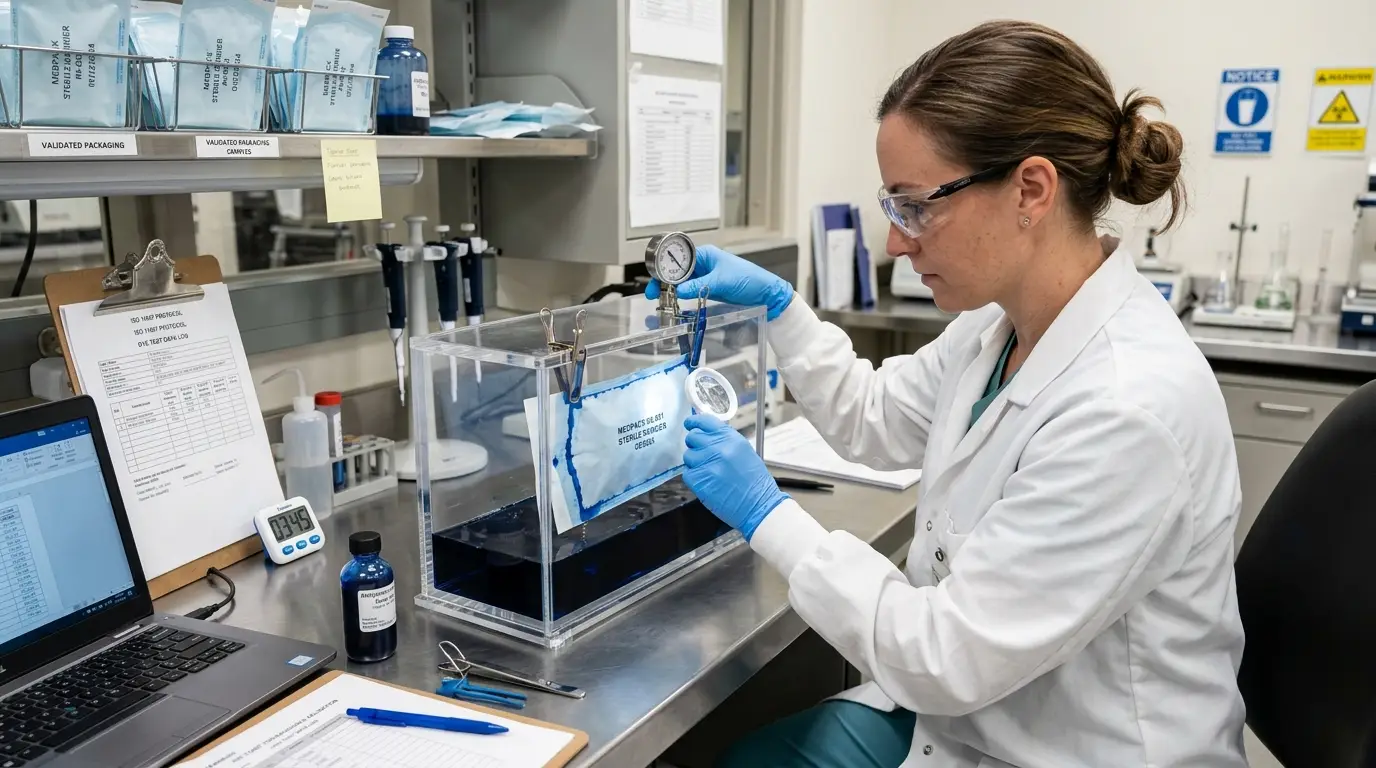
Sterile Packaging Validation: ISO 11607-2 IQ OQ PQ Guide
ISO 11607-2 sterile packaging validation is a mandatory requirement for any terminally sterilised medical device — not a quality option that can be deferred or abbreviated.
What ISO 11607-2 Requires
ISO 11607-2 requires that all processes used in the formation, sealing, and assembly of sterile barrier systems be validated. This includes: sealing processes (heat sealing, impulse sealing, ultrasonic sealing, adhesive bonding), forming processes (thermoforming, cold-forming), and assembly processes (loading, closing, labelling). The standard requires a formal validation approach comprising Installation Qualification (IQ), Operational Qualification (OQ), and Performance Qualification (PQ) for each process and for each packaging configuration produced on the process.
The IQ/OQ/PQ Framework for Sterile Packaging
IQ — Installation Qualification
IQ documents that all equipment used in the sterile barrier process is installed correctly and all critical components are present, functional, and calibrated. For a medical pouch sealer IQ: verify machine identification (model, serial, software version), confirm calibration status of temperature sensors and pressure gauges (with calibration certificates traceable to national standards), verify all safety interlocks and alarms function, and confirm the installation environment is consistent with the equipment specification (utilities, temperature, humidity). IQ is a prerequisite for OQ.
OQ — Operational Qualification
OQ demonstrates that the equipment consistently operates within specified parameter ranges throughout its operating envelope. For a sealing process OQ: challenge sealing temperature at minimum, nominal, and maximum setpoints and verify actual temperature at the seal interface (not just the controller display); challenge dwell time and sealing pressure at min/nom/max and measure actual values with calibrated instruments. OQ results define the Proven Acceptable Range (PAR) — the parameter ranges that consistently produce seals meeting acceptance criteria. The PAR is the operating window used in PQ.
PQ — Performance Qualification
PQ demonstrates that the complete validated process — equipment, materials, operators, and environment — consistently produces sterile barrier systems that meet all specified requirements under realistic production conditions. PQ requires a minimum of three separate validation runs, each using production-representative materials and operators, at the worst-case conditions identified in OQ (typically the parameter extremes of the PAR). Sampling at defined intervals provides statistical confidence in the results. PQ is the formal basis for process release to production.
Validation Report and Approval
The validation is summarised in a final validation report that includes: summary of IQ, OQ, and PQ results against acceptance criteria, statistical analysis of PQ data (Cpk for continuous variables, pass rates for attribute tests), any deviations encountered and their dispositions, and a formal conclusion on whether the process is validated. The report must be reviewed and approved by Quality before the process is released for production use. The validated state is maintained through a process monitoring programme and change control procedure.
Critical Process Parameters and Acceptance Criteria
| Process | Critical Parameters | Typical PQ Acceptance Criteria |
|---|---|---|
| Heat sealing (Tyvek pouch) | Temp ±3°C, dwell ±0.05s, pressure ±0.2 bar | Peel force 1.0–3.5 N/15mm; no integrity failure (ASTM F1929) |
| Thermoforming (PETG tray) | Form temp ±5°C, vacuum timing, cooling dwell | Flange flatness ±0.1 mm; wall thickness ≥ specification minimum |
| CFF blister sealing | Temp ±3°C, dwell ±0.05s, pressure ±0.3 bar | Seal strength per spec; WVTR of formed pocket ≤ 0.5 g/m²/day |
| Tray lidding (lid sealing) | Temp ±3°C, dwell ±0.1s, platen parallelism | Full perimeter seal width ≥ 3 mm; dye penetration: no ingress |
Revalidation Requirements
ISO 11607-2 requires that the validated state of the process be maintained through change control and periodic review. Revalidation is triggered by: change of packaging material or material supplier (any change affecting seal quality or barrier properties), change of sealing equipment or tooling (including replacement of sealing dies), change of process parameters outside the validated PAR, facility or environment change, and adverse trend in routine process monitoring data. The extent of revalidation (full OQ/PQ vs. abbreviated PQ) is determined by risk assessment through the change control procedure.
Frequently Asked Questions
How many packaging configurations require separate validation?
In principle, each unique packaging configuration (a specific combination of materials, equipment, and process parameters) requires its own PQ. However, ISO 11607-2 allows a bracketing or family validation approach where a worst-case representative configuration is qualified to cover a range of similar configurations — for example, the largest and smallest pouch size on a given sealer may be qualified to cover all intermediate sizes, if justified by engineering rationale. The bracketing approach must be documented and justified in the validation protocol.
What sample size is needed for a PQ study?
ISO 11607-2 does not specify a fixed sample size — it requires that sample sizes be justified by statistical rationale. Common approaches: minimum 3 runs with a total of at least 30 samples per run per critical quality attribute, with Cpk ≥ 1.33 as the acceptance criterion for continuous data (seal strength, dimensions). Some organisations use larger sample sizes (100+ per run) for high-risk applications or where process variability is higher. Sample size should be defined in the validation protocol before testing begins and should not be changed after reviewing data.
Can packaging validation be outsourced to a testing laboratory?
Yes — the physical testing (seal strength, dye penetration, distribution simulation) can be performed by accredited third-party laboratories. However, the manufacturer retains responsibility for the validation protocol design, approval of acceptance criteria, review of all data, and the final validation report approval. The manufacturer cannot outsource the management responsibility for the validation to a laboratory. All test reports from external laboratories must be reviewed by the manufacturer's quality system and formally approved as part of the validation record.